
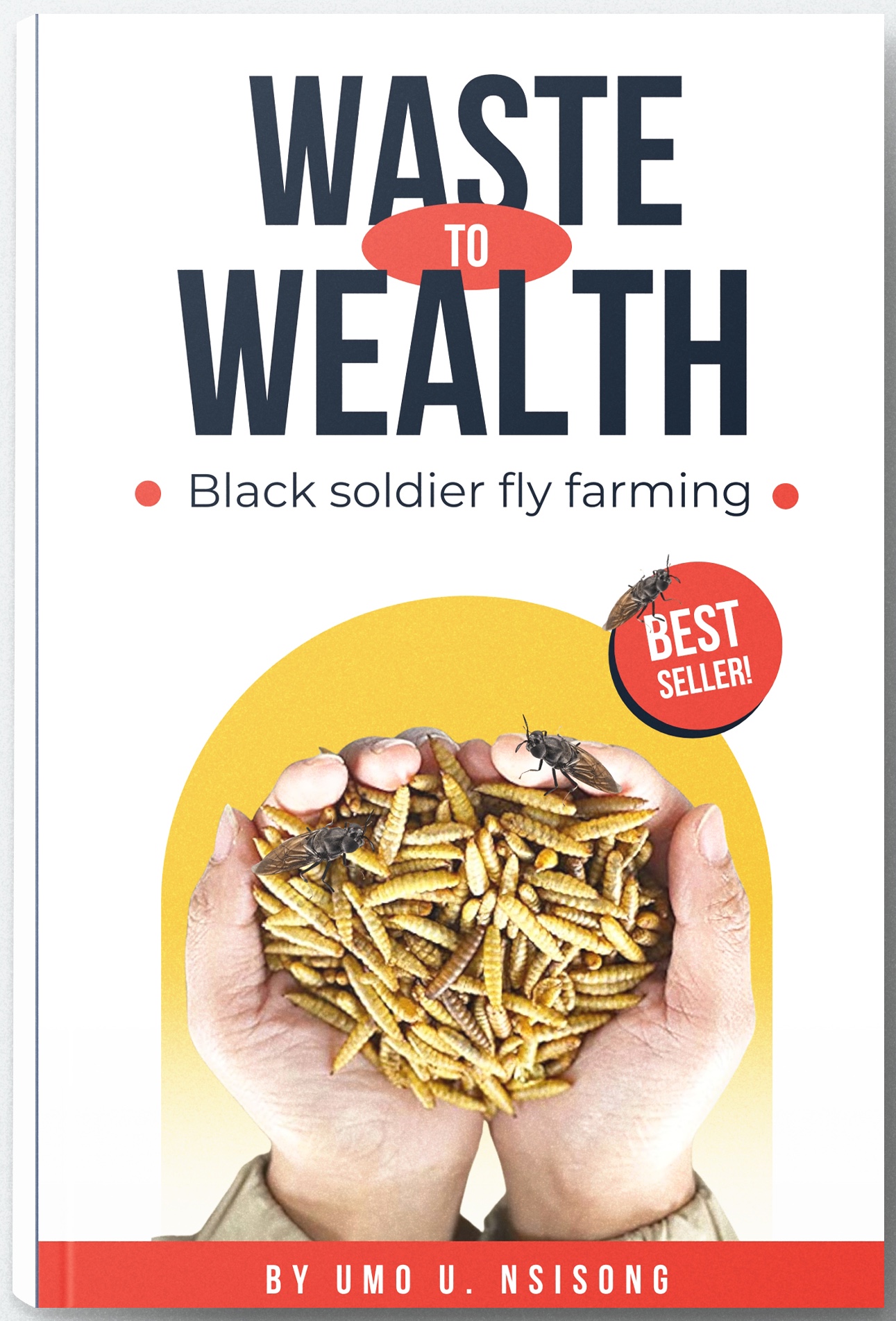
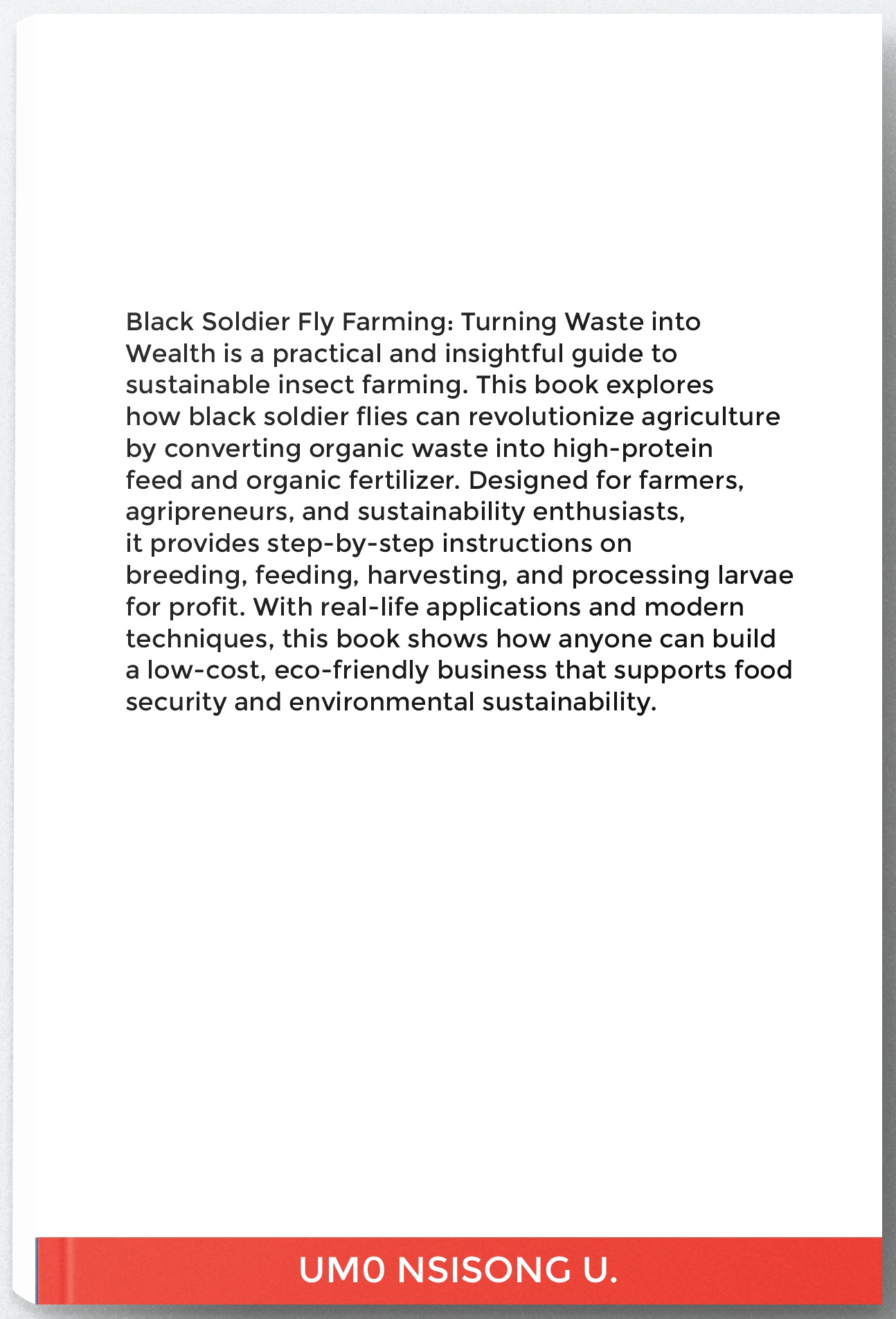
Book Preview
Part I: Foundations of Black Soldier Fly Farming
Chapter 1 – Introduction to Black Soldier Fly (BSF)
• BSF (Hermetia illucens) is a harmless insect, unlike the common housefly.
• Its larvae consume organic waste rapidly, turning it into nutrient-rich biomass
• A Short Life, a Big Impact
• A Global Movement Toward Sustainable Protein
Chapter 2 – Why Black Soldier Fly Farming Matters
• Environmental benefits: Reduces food waste, lowers landfill use, and cuts methane emissions.
• Economic value: Produces affordable feed for poultry, fish, and pigs.
• Social impact: Creates jobs, especially for youth and women in rural areas.
• Efficiency in Resource Use: Doing More with Less
Chapter 3 – Global Perspectives
• Africa: Growing adoption in Kenya, Nigeria, and South Africa for poultry and fish feed.
• Asia: Leading commercial farms in China, Indonesia, and Vietnam.
• Europe: Biotech companies are scaling up BSF farming under strict EU regulations.
• Americas: BSF being integrated into pet food and aquaculture industries.
Part II: Practical Farming Techniques
Chapter 4 – Getting Started
• Choose location with good ventilation, waste availability, and security.
• Deciding the Scale of Your BSF Farm
• Indoor Vs outdoor BSF farming
Chapter 5 – Understanding the BSF Lifecycle
• Eggs hatch in 4–6 days.
• Larvae (the most valuable stage) eat organic waste for 10–14 days.
• Pupa stage is the transition before adulthood.
• Adult flies live 5–8 days, mate, and lay eggs — they don’t eat, only drink water.
Chapter 6 – Feeding the Larvae
• Best feeds: fruit and vegetable waste, food scraps, brewery by-products, animal manure.
• Avoid toxic or oily waste (chemicals, plastics, heavy metals).
• Larvae can reduce waste volume by up to 60%.
• Feed conversion ratio: 1 kg of waste produces 200–250 g of dry larvae.
Chapter 7 – Building Infrastructure
• Breeding cages for adult flies.
• Small containers for egg hatching and larval growth.
• Larger bins or trays for mass rearing.
• Simple harvesting tools (sieves, buckets) or automated conveyor systems.
Chapter 8 – Harvesting and Processing
• Harvest larvae at the prepupal stage for maximum protein.
• Dry or roast larvae before grinding into meal.
• Extract oil for feed or industrial uses.
• Collect frass (larval manure) for organic fertilizer.
Part III: Products and Markets
Chapter 9 – Products from BSF Farming
• Protein meal (42–55% protein) for poultry, pigs, and fish.
• BSF oil rich in lauric acid for animal health.
• Frass as a natural organic fertilizer.
• Chitin from exoskeletons, useful in medicine and industry.
Chapter 10 – Market Opportunities • Poultry feed mills and fish farms.
• Pet food industry (dogs, reptiles, aquarium fish).
• Organic fertilizer markets.
• Export opportunities for dried larvae and BSF meal.
Chapter 11 – Business Models
• Smallholder: rearing BSF for personal poultry/fish.
• Cooperative model: shared infrastructure for community farmers.
• Large-scale: commercial farms supplying feed industries.
• Integrated model: combining BSF with aquaculture or poultry farms.
Part IV: Sustainability, Challenges, and the Future
Chapter 12 – Environmental and Social Impact
• BSF farming diverts food waste from landfills.
• Helps farmers cut feed costs by up to 30%.
• Empowers communities with new income streams.
Chapter 13 – Challenges in BSF Farming
• Lack of awareness and training.
• Seasonal challenges (temperature, humidity).
• Limited regulations and market acceptance.
• Need for funding and technical support.
Chapter 14 – The Future of BSF Farming
• Growing recognition by FAO, World Bank, and NGOs.
• Potential to replace fishmeal and soy in animal feed.
• Expansion into pharmaceuticals and biomaterials.
• Technology-driven farms with AI, sensors, and automation.
Part V: Practical Resources
Chapter 15 – Step-by-Step Startup Guide
• Budget estimates for small, medium, and large farms.
• How to source BSF eggs or starter kits.
• Building a pilot farm before scaling up.
• Tips for maintaining healthy colonies.
Chapter 16 – Case Studies and Success Stories
• Nigeria: Small farmer turns waste into chicken feed.
• Kenya: Commercial farm supplying feed to aquaculture industry.
• Europe: High-tech farms scaling protein production.
• Asia: Integration with municipal waste management systems.
Chapter 17 – Tools, Suppliers, and Networks
• List of equipment suppliers.
• Global BSF associations.
• NGOs and funding opportunities.
Chapter 18
• Sample grant cover letter
• Sample grant proposal
• Sample business plan


Be the first to review “Black Soldier Fly Farming”